
Holding It Together While Falling Apart

A few days ago, Black Girl Caucus shared a post on TikTok from a digital creator about how depression hides in Black women — exhaustion, isolation, functioning through pain, and pretending to be okay. You can view the post here: @blkgrlcaucus on TikTok
We thought it was thoughtful and relatable. We did not expect what happened next.
Nearly a thousand women — and people who love them — flooded the comments with responses like “this is me,” “I’m crying reading this,” and “I thought I was the only one.” The post reached more than 100,000 people, and while numbers on the internet come and go, I haven’t been able to stop thinking about what those comments revealed underneath them.
Black women are not okay. And maybe even more painfully, many of us do not feel like we are allowed to say that out loud. I’ve been treated for depression on and off since my early adulthood, but I’ve also become very good at hiding it. A lot of Black women have. My hiding places are humor and isolation.
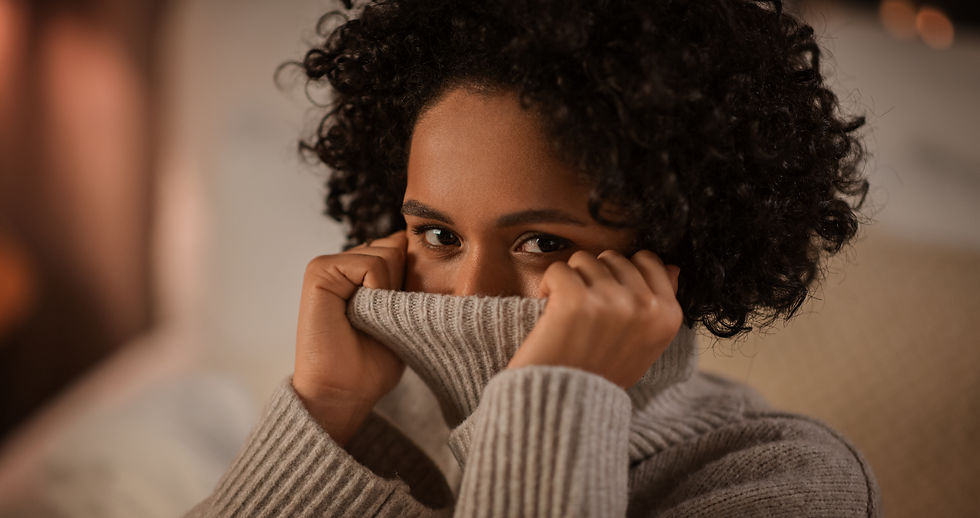
If you know me, you probably know me as the funny one. The one cracking the joke first. The one people assume is okay because she can still make everybody else laugh. But depression does not always look the way people think it does, especially in Black women.
I know how to disappear inside of “being busy.” I know how to still answer emails, still show up to meetings, still make people laugh, still support everybody else while quietly pulling away myself. From the outside, it can look like ambition. Responsibility. Leadership. Strength. But sometimes it’s survival.
One of the things that struck me most while reading the comments was how many women recognized themselves in the quieter forms of depression. Not just sadness, but exhaustion. Numbness. Constant functioning. Feeling hopeless while still getting everything done.
And I’ll be honest: reading those comments broke my heart.
Sad that so many Black women immediately saw themselves in that pain. Sad because I know what it feels like to carry hopelessness privately while still feeling pressure to appear capable, grateful, strong, and “together.” Sad because so many of us are terrified of being seen as weak, dramatic, incapable, or not strong enough in a world that already questions Black women constantly.

Some Black women are already fighting to hold themselves together privately — because of grief, trauma, anxiety, depression, family history, or the way their brain works. Then we move through a world that adds even more weight while expecting us to stay strong through all of it.
Too loud. Too much. Too opinionated. Not soft enough. Not desirable enough. We are told our qualifications are questionable, our leadership has to be earned over and over again, our tone needs to be watched, our anger needs to be softened, and our needs can wait until everybody else is taken care of first.
And I think some of the very traits Black women develop to survive are also the things quietly hurting us.
Pushing through.
Showing up no matter what.
Taking care of everybody else.
Making the joke.
Holding it together.
Never letting people see you fall apart.

The world expects Black women to endure and then acts surprised when we are exhausted by it. That’s part of why Black Girl Caucus exists.
Not because we have all the answers. We don’t. And not because we think community alone magically fixes pain this deep. But because Black women deserve spaces where we can tell the truth. Spaces where we do not have to perform strength every second. Spaces where we can ask hard questions together, figure things out together, or simply be reminded that we are not failing for struggling.
Sometimes the first step is hearing another Black woman say, “That’s how I feel too.”
What started as a post we thought would resonate turned into something much bigger: a reminder that there are Black women all around us carrying things silently. Women who are overwhelmed, isolated, burned out, anxious, depressed, and trying their best to survive while still appearing “fine.”

We hear you and we want to keep listening.
As we continue thinking about what support can and should look like for Black women, we’re sharing mental health resources below that may be helpful to you or someone you love. More than anything, we hope this conversation reminds Black women that softness, care, honesty, rest, and support should not have to be earned. You deserve those things simply because you are you.
Resources
Books
Podcasts
Mental Health & Wellness
@drlawandahill on Instagram — Providing therapy and safe spaces for Black women navigating burnout, life transitions, anxiety, and emotional wellness.


Comments